Campaign
14 November 2026Fifteen fish a day
English law allows any angler to remove fifteen coarse fish, one pike and two grayling from a river, every day of the season. We have asked the Environment Agency to delete it.
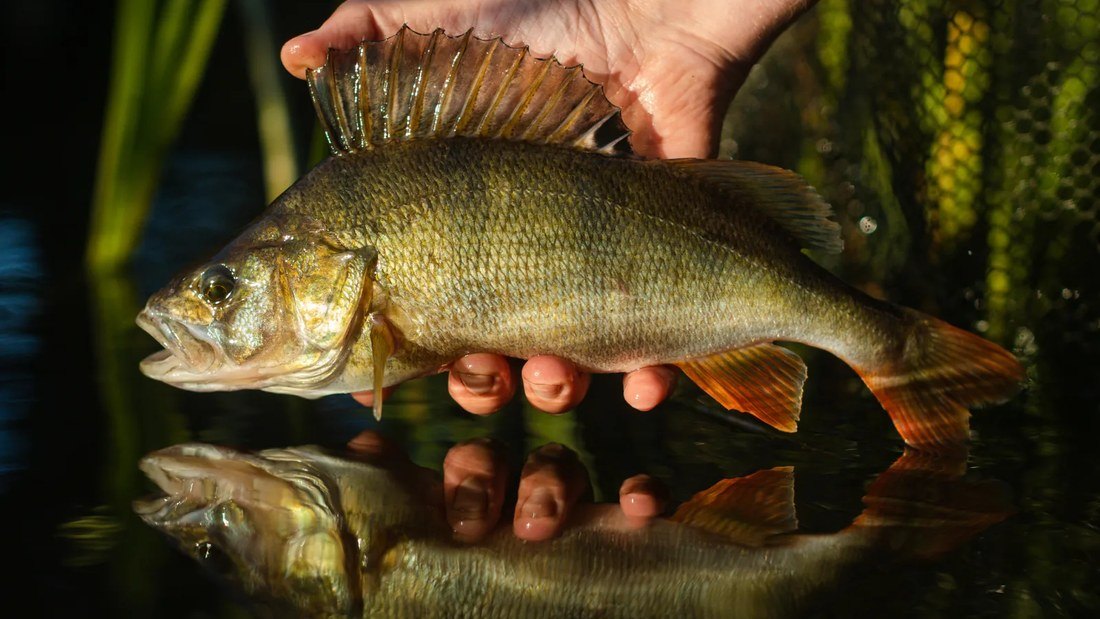
“But .gov says I can take…”
This is the line we hear time and time again when challenging anglers about the removal of fish from our waters. It’s about time the law was updated to match the time we’re living in.
What the law currently allows
The Fish Removal (Rod and Line) Byelaws came into force on 1 June 2010 under the Water Resources Act 1991. Byelaw 3(i) lets any angler take from a river, stream or drain, each day, fifteen fish up to 20cm, one pike up to 65cm, and two grayling between 30cm and 38cm.
Byelaw 3(ii) covers stillwaters and canals. There, no fish may be removed at all without the written permission of the owner or occupier.
The same instrument requires the owner’s permission on a canal and requires nobody’s permission on the river running alongside it.
Every water in England is owned or controlled. The fishing rights on a river belong to someone, in almost every case a club, a syndicate or a riparian owner. The byelaw recognises that on stillwaters and canals and sets it aside on rivers, and the waters it leaves open are the ones under the most pressure.
We have not found a single coarse fishery in England that permits anglers to remove coarse fish. The same GOV.UK page that publishes the daily limits warns that taking fish from privately owned water without written permission is an offence. Both appear on the same screen.
Why it matters on the bank
The purpose of the ask is to remove a conflict.
Almost every club and fishery in England forbids the removal of coarse fish in its own rules. Those rules are contractual, and the only sanction a club holds is expulsion. Beyond that the sole route is a theft provision from 1968 that is rarely pursued. The Agency will not act either, because nothing in its own byelaw has been broken. The byelaw permits the take.
A bailiff on the bank holds a club rule with no criminal backing and a theft provision nobody runs, facing an angler holding up a government page that says he may take fifteen fish. That is the position our bailiffs are put in every season.
Deleting the allowance resolves it. Our own rules and the national byelaw would say the same thing, and the Agency would have something to enforce.
What we asked, and what the Agency confirmed
On 16 October we asked the Environment Agency, under the Environmental Information Regulations 2004, for the consolidated text of the byelaws as in force, for any instrument amending or revoking any part of them since 2010, and for the date and reference of their confirmation by the Secretary of State. The Agency replied on 12 November under reference EIR2026/49836.
It confirmed that the byelaws have never been amended:
“We can confirm that no further amendments have been made to these byelaws since they came into force on 1 June 2010.”
It also confirmed that no consolidated text exists. The byelaws were modified at the point of confirmation in May 2010, and of those modifications the Agency states:
“These amendments have not been incorporated into a separate consolidated version of the byelaw text.”
The law an angler is expected to obey is two documents that have to be read side by side, and sixteen years on they have never been published as one. What anglers read instead is a GOV.UK summary, and that summary does not match the instrument. Schedule 1 of the byelaw is a closed list of fourteen species and expressly includes hybrids between them. The GOV.UK page names twelve, says “including”, and does not mention hybrids at all.
Rob Harris, Chairman
“Our bailiffs are met with the GOV.UK figures quoted back at them as an entitlement. The byelaws set a maximum. They confer no right to take fish from any water, and almost every club rule in the country forbids it outright. We are asking the Agency to remove a conflict it created.”
“We asked what the law actually says and who confirmed it. The answer is that it has not been touched in sixteen years and has never been published as a single document. That isn’t an administrative detail when it’s the law every angler on every river is told to follow.”
What we are asking for
We have asked the Environment Agency to amend the byelaws in three respects.
- Delete byelaw 3(i)(a), (b) and (c). That removes the daily take allowance. Byelaw 3(i) then reads as a prohibition on removing coarse fish from rivers, streams and drains, which is what almost every fishery in the country already requires of its members.
- Widen the final paragraph of byelaw 3 to cover the retention of fish for use as bait on the water they came from. That paragraph already exempts anyone who returns a fish immediately, or who retains it in a keepnet or keepsack and returns it alive on or before the end of fishing. The mechanism is already in the byelaw. It needs a few words, not a new regime.
- Keep the dispensation route in byelaw 3(i), under which the Agency may give an owner or occupier written permission to set the requirements aside. Where a genuine case exists, including commercial deadbait supply, it should be made to the Agency by the fishery the fish come off, rather than held as a standing permission by every angler on every river.
What this is not
This is not an attack on livebaiting. We are not asking for livebaiting to be restricted, licensed or banned, and nothing in the ask makes a live or dead bait harder to come by. A pike angler who nets a few roach and fishes them on the same water is unaffected, and is already exempt under the byelaw’s final paragraph. We are asking for bait to be retained rather than taken, which puts it outside this byelaw instead of inside it.
This is not a change to where a bait may be used. Moving a live fish from one water to another, or holding one with that intention, has been an offence since 19 January 2015 under the Keeping and Introduction of Fish (England and River Esk Catchment Area) Regulations 2015, and carries a fine of up to £50,000 on summary conviction. The same-water rule is the law now. We are not proposing it and nobody should read it as new.
This is not a judgement on anglers who bait with fish. We do not permit livebaiting on our own fisheries and never have. That is a rule for our own waters, not the national ask, and it is not being put forward as one.
This is not a challenge to game fishing. Trout and salmon are not in Schedule 1 of this byelaw and the daily allowance has never applied to them. Deleting it changes nothing for the game angler.
Grayling
Grayling sits in Schedule 1 of a coarse fish byelaw under a slot limit that reads like a game fish rule: two fish, between 30cm and 38cm.
It should be one or the other. If grayling stays on the coarse fish list, removal goes with the rest of that list. If it is a game fish, it should come out of Schedule 1 and be dealt with where game fish are dealt with. Either way the two-fish allowance goes, because it exists only because nobody has decided which category grayling belongs in.
Grayling are in the vast majority returned. The Grayling Society’s own angling code advocates catch and release, and the byelaw tells anglers they may take two. We are asking for the law to stop contradicting both the sport’s own body and what nearly every grayling angler already does.
Why the bait case does not save the allowance
Bait is the only argument anyone has advanced for keeping the take allowance, and bait does not require it. Retention on the same water delivers the bait and carries none of the damage. No fish leaves the fishery and nothing moves between catchments.
The allowance does more than supply bait. It permits the permanent removal of fish from rivers already under pressure from abstraction, pollution and habitat loss, it cuts across the rules of almost every fishery in the country, and it sits against both national fisheries strategy and the welfare standards anglers now hold themselves to. A retention provision supplies the bait without any of that.
Angling should not be anchored to a take mechanism it has no need of.
The argument we reject
The rules were last examined publicly in 2022, when it was argued that small permitted takes let angling be defended as a source of food and not only as recreation. We refuse that argument outright.
Rob Harris, Chairman
“If the case for angling is that we are less cruel because we kill things, we have gone wrong somewhere. Angling is a day outdoors and a fish briefly in the hand, admired and slipped safely back. We are not defending the sport on the grounds that some of us eat the catch.”
Section 6(6) of the Environment Act 1995 places the Environment Agency under a duty to maintain, improve and develop freshwater fisheries. The work on these rivers is done by volunteers who plant the margins, clean the gravels and walk the banks. A byelaw that permits what those fisheries’ own rules forbid does not serve that duty.
Support the campaign
We have asked the Angling Trust and Fish Legal to support this submission publicly. The Trust speaks for the sector with Defra and the Agency in a way a single club cannot. Fish Legal exists to act for clubs and fisheries whose rights over their own water are not holding. That is what the allowance produces.
We are also asking other clubs and fisheries to get in touch at support@fishinginpeterborough.co.uk, whether you agree with our position or not. How the allowance works on other waters, and what it costs those who have to police it, is the evidence this case will be argued on.
In particular, if any club, fishery or landowner does permit removal under these limits, we would like to hear from you. We have not yet found one.
If you are one of our members and you get the GOV.UK figures quoted at you on the bank, report it to the bailiff team.
Read the documents
- Our submission to the Environment AgencyPDF, 4 pages
- Press release, with notes and exhibitPDF, 10 pages
Press enquiries: support@fishinginpeterborough.co.uk